Who we serve · Young Professionals
Built for Your First Decade of High Earnings
New salary, new equity, new stakes. Get the structure early and let time do the heavy lifting.
Your Ambition Deserves Infrastructure
Most firms wait until you already have millions. We would rather help you build them. Get the structure right now, and every decision for the next thirty years gets easier.
High Income Deserves a Real Plan
- The raise arrived, but the savings didn't
- Equity comp you don't fully understand
- Old 401(k)s scattered at old employers
- A tax bill that surprises you every April
- Internet advice that contradicts itself
Three Moves That Matter Most Right Now
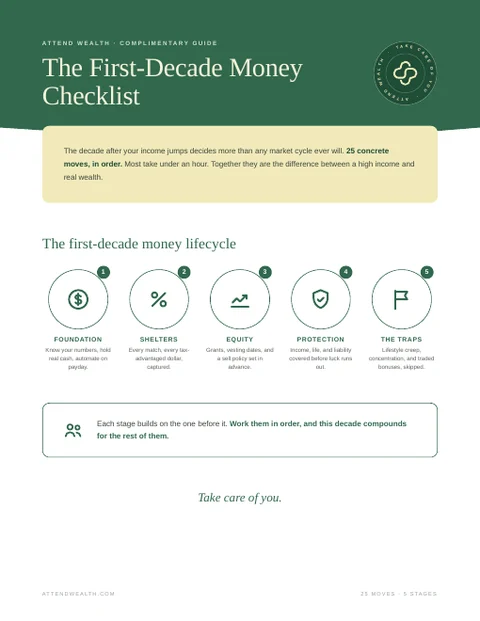
The First-Decade Money Checklist
25 concrete moves, in order, that turn a big paycheck into real wealth. Most take under an hour.
- The five-account foundation and the 20% rule
- Equity comp, decoded: RSUs, vesting dates, and withholding
- The five traps that quietly eat first-decade wealth
We'll send the guide plus one useful idea a month. Unsubscribe anytime. No spam, ever.
Common Questions About Young Professionals
When should a young professional hire a financial advisor?
When income has outpaced habits: a big raise, equity compensation, a first home, or student loans and a 401(k) competing for the same dollars. Attend has no account minimum, so timing depends on complexity, not assets.
How much should I be saving in my 20s and 30s?
A common target is 15 percent of gross income toward retirement, including any employer match, with an emergency fund of three to six months of expenses in cash. Higher earners often need more to keep lifestyle from outrunning savings.
Should I pay off student loans or invest?
Capture your full 401(k) match first. After that, compare the loan rate to expected after-tax investment returns and whether you qualify for forgiveness. We model both paths side by side.
Roth or traditional 401(k)?
Roth usually wins while your tax rate is lower than it will be later, which is common early in a career. As income rises into higher brackets, traditional contributions often make more sense. Many people split the two.
What does Attend charge young professionals?
A flat fee for a financial plan, and a tiered percentage of assets if Attend manages investments. There is no minimum. Fees are in writing before any work starts.
Do you help with equity compensation and job offers?
Yes. We review offers, model RSU and option decisions against your tax picture, and plan around vesting so you are not surprised by a tax bill.
Last updated September 21, 2026. Answers are educational and not individualized advice. See our disclosures.
Let Us Attend to You
Start with a complimentary, no-pressure conversation. Ask whatever is on your mind and walk away with a straight answer.
Book Your Complimentary Review