Who we serve · Pre-Retirees & Retirees
Make Work Optional and Keep Life Full
Turn decades of saving into a confident retirement paycheck, with taxes, Social Security, and healthcare handled.
What Your Retirement Plan Covers
Retirement is less about one number and more about a dozen decisions made in the right order. These are the ones we handle with you.
Your Retirement Date
A projection that includes taxes, inflation, and bad markets, so the date you pick is one your money can actually support.
Social Security & Pensions
Claiming ages modeled side by side, spousal and survivor benefits included, and lump sum versus annuity decisions worked through on paper.
Withdrawal Strategy
Which account to draw from first, how much, and when, sequenced to keep more invested and your tax bracket steady.
Taxes in Retirement
Roth conversions in low-income years, required distributions planned ahead, and charitable giving structured to lower the bill.
Healthcare & Medicare
Coverage between work and 65, Medicare enrollment and supplements, and long-term care weighed honestly against self-funding.
Estate & Family
Beneficiaries current, documents in place with your attorney, and a plan your spouse and children could pick up and follow.
Your Paycheck Rebuilt
Retirement income is assembled, not found. A typical Attend retirement paycheck draws from several coordinated sources.
Illustrative mix. Yours will differ.
What We Do and When
Retirement planning runs on a sequence. This is what we work on with you at each stage, from five years out to the years after your last paycheck.
Five years before
We find your number, test the plan against bad markets, and use the last high-income years for catch-up savings and Roth conversions.
One to two years before
We build the cash and bond buffer, model your Social Security and pension choices, and price healthcare for the years before Medicare.
The year you retire
We consolidate accounts, set up withdrawals and tax withholding, and put your first year of income on a calendar.
Every year after
We refill spending, project taxes, handle required distributions, and update the plan as health, markets, and family change.
The Questions That Matter Most Before You Retire
When does work actually become optional?
When your portfolio can sustainably fund your spending. We find your number, stress-test it against bad markets, and give you a working retirement date. Try the readiness calculator for a first estimate.
When should I claim Social Security?
Usually later than people do, but not always. Health, spousal benefits, and taxes all move the answer. We model your claiming ages side by side before you file.
Which account do I draw from first?
Order matters enormously: taxable, tax-deferred, and Roth dollars each have a best moment. The right sequence can add years to a portfolio's life.
What about healthcare before 65?
Bridging to Medicare is a plannable expense, not a reason to keep working. Marketplace strategy and income management can meaningfully reduce the cost for many households.
What if markets drop right as I retire?
Sequence risk is the biggest threat to a new retiree. We hold a cash and bond buffer designed to reduce the chance that a bad first year forces you to sell stocks at the bottom.
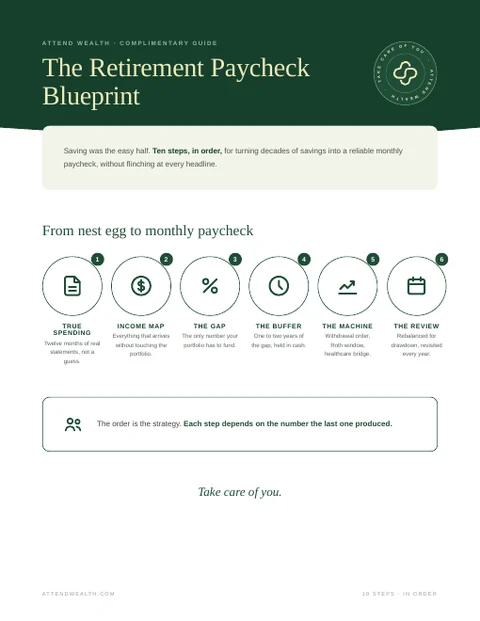
The Retirement Paycheck Blueprint
The ten-step order of operations for turning decades of savings into a durable monthly paycheck.
- The only number your portfolio actually has to fund
- The cash-buffer rule that beats market fear
- Withdrawal order and Roth windows, explained simply
We'll send the guide plus one useful idea a month. Unsubscribe anytime. No spam, ever.
Common Questions About Pre-Retirees & Retirees
How do I turn savings into a retirement paycheck?
By drawing from accounts in a planned order, taxable first in most cases, then tax-deferred, then Roth, and keeping one to two years of spending in cash so a bad market year does not force sales. We build the schedule year by year.
When should I take Social Security?
For most healthy retirees with other savings, delaying toward 70 increases lifetime benefits and protects a surviving spouse. We model claiming ages with taxes and survivor benefits before recommending one.
Should I do Roth conversions before required distributions start?
Often yes, in the years between retirement and RMD age when income is low. Converting enough to fill low brackets reduces future RMDs and Medicare surcharges. We size conversions against the IRMAA thresholds.
How do I handle healthcare before Medicare?
Options include COBRA, a spouse's plan, or an ACA marketplace plan, where keeping taxable income low can qualify you for subsidies. We plan withdrawals around that.
What if the market drops right after I retire?
That is sequence-of-returns risk. A cash reserve, a de-risking schedule in the years around retirement, and flexible spending rules keep an early downturn from derailing the plan.
What does Attend charge retirees?
A flat fee for a financial plan, and a tiered percentage of assets if Attend manages investments. Fees are in writing before work starts and published in our Form ADV.
Last updated September 21, 2026. Answers are educational and not individualized advice. See our disclosures.
Let Us Attend to You
Start with a complimentary, no-pressure conversation. Ask whatever is on your mind and walk away with a straight answer.
Book Your Complimentary Review